Three well-chosen objects can create a richer conversation than a race through a hundred highlights.
Give everyone a role
Let one visitor find shapes, another describe materials and another ask questions. Change roles at the next object. Avoid asking a child to guess a fact they cannot see; turn that question into a label-reading task.
Use a repeatable comparison
Choose one painting and one object made to work or perform. Ask “what can this material do?” in both cases. A painted illusion, a steam locomotive and a puppet answer in different ways without needing a winner.
Keep the task physically safe
Sketch or describe from the permitted distance. No touching, climbing, testing a water lily or operating mechanisms. Check whether pencils, bags and photography are allowed at the institution before the visit.
Stop before attention runs out
Agree on a small selection, a break and an optional extra stop. At the end, each person names one changed idea. Save those notes beside the object names; they are your family’s response, not a claim made by the museum.
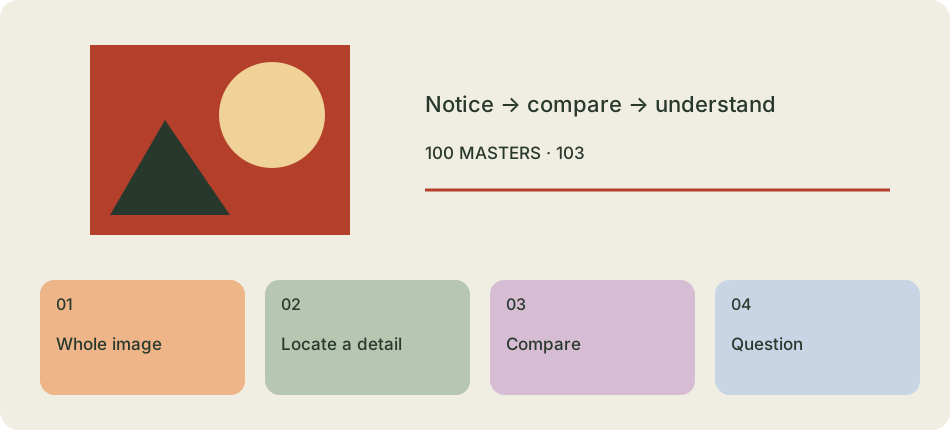
Original editorial diagram. A reading aid, not a reproduction or technical drawing of the object.
Whole image — Describe the strongest visible contrast.
Locate a detail — Follow a colour, gesture or line.
Compare — Test your observation on a second work.
Question — Ask what evidence could change your reading.
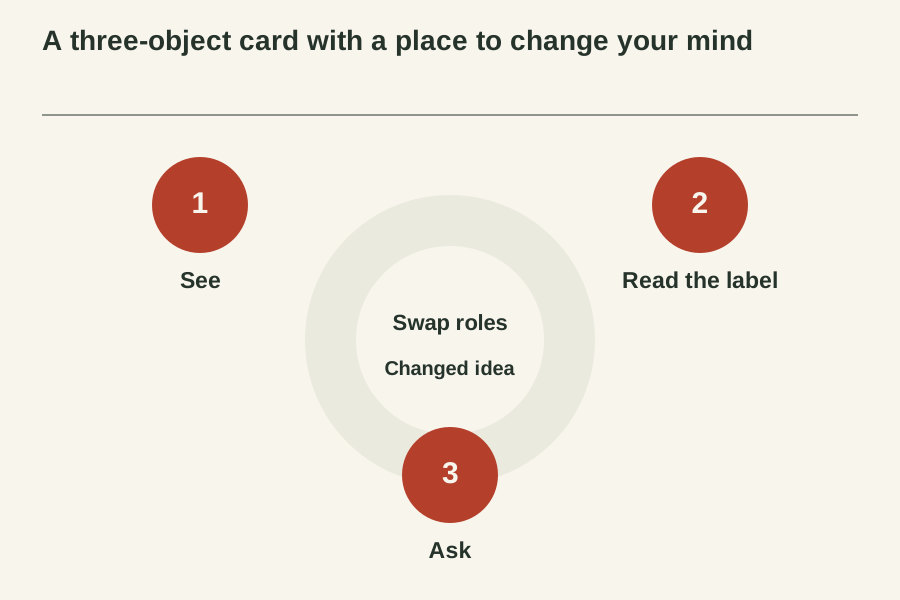
A three-object card with a place to change your mind
A family activity does not need a race or a right answer for every object. Give each visitor one observable job and leave a line for a question that the label cannot answer. Use a substitute object if the chosen work is not on display.
Try one comparison, then swap roles
Role
Task from the permitted distance
Record
Shape finder
Describe a repeated line, shape or visible contrast.
“I can see…”
Label reader
Find material, maker or date on the label.
“The label says…”
Question keeper
Ask what evidence would explain one observation.
“We still wonder…”
A fictional round
At an unspecified painting, one visitor notices a bright diagonal. Another finds “oil on canvas” on its imaginary label. A third asks why the diagonal draws attention. These are separate observations and questions, not facts about a named Brussels work. At the next object, switch roles and compare what the material makes possible.
Before visiting, check the museum’s current display, accessibility and rules for sketching or photography.
Choose a small route and an optional substitute. Include a break without making completion compulsory.
For each object, write its actual label name and one observation. Keep interpretations in a separate line.
Swap roles. A child may point, speak or draw instead of writing; no private personal data is needed.
Finish with one changed idea and one unresolved question. Stop when the group needs to stop.
AMNH’s education resources use observing, sketching and comparing to develop evidence-based arguments. Our role card is an original adaptable activity, not an official Brussels museum trail or a reproduction of an artwork. Check local rules; never touch objects or operate mechanisms to complete a task.
Original family observation wheel. It represents roles, not a museum object or a guaranteed display route.
Text equivalent: See → Read the label → Ask → Swap roles → Changed idea.
Saving needs JavaScript. Save buttons stay unavailable until the selection tool loads. You can still read and browse the collection. Browse the collection