
Look at a painting’s surface without guessing its condition
Back to the guideA screen image helps you prepare questions, but lighting, scale and reproduction can change what you see. Use this looking procedure in a gallery where access is permitted; it neither authenticates a work nor diagnoses its conservation condition.
- Record the artist, title, date, medium and institution from the actual label. Keep the 2016 campaign record separate from a museum’s current display information.
- Begin at a comfortable permitted distance. Describe a visible feature before interpreting it: a raised-looking mark, a glossy patch or a change in colour.
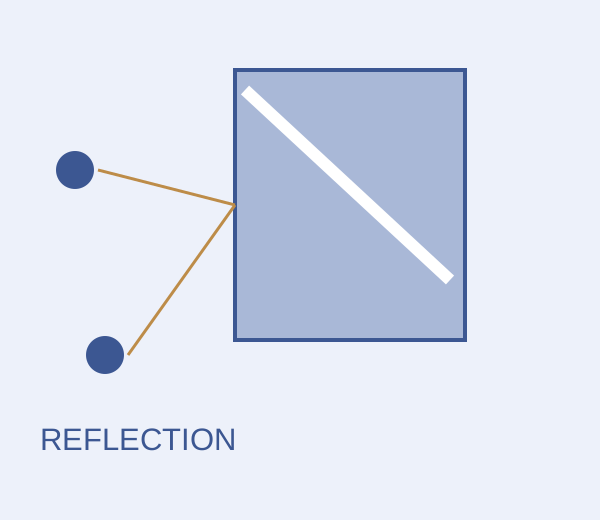
- Change your viewing position only within the visitor rules. Note whether the feature changes with reflected light; do not touch, use flash or move barriers.
- Compare the observation with a reproduction and write what the reproduction cannot resolve. Ask museum staff when the distinction matters.
| Field | Example or check |
|---|---|
| Observation card — invented | A light patch appears near the edge when viewed from the left. From another permitted position it becomes less visible. |
| What can be recorded | Position, lighting and visible change. A photograph can preserve a question, subject to the museum’s photography rules. |
| What remains unresolved | Whether the patch is varnish reflection, paint texture, a later intervention or another cause. Appearance alone does not establish damage. |
| Useful question | “Does the museum provide a technical account of the surface or display lighting for this work?” Match any answer to the identified object. |
| Blank looking card | Label identity __; position __; visible feature __; change with viewpoint __; reproduction limitation __; source or staff question __. |
The diagram below is a conceptual viewing aid, not a fabricated museum object. Check the museum’s current object page before planning a visit.