The object in context
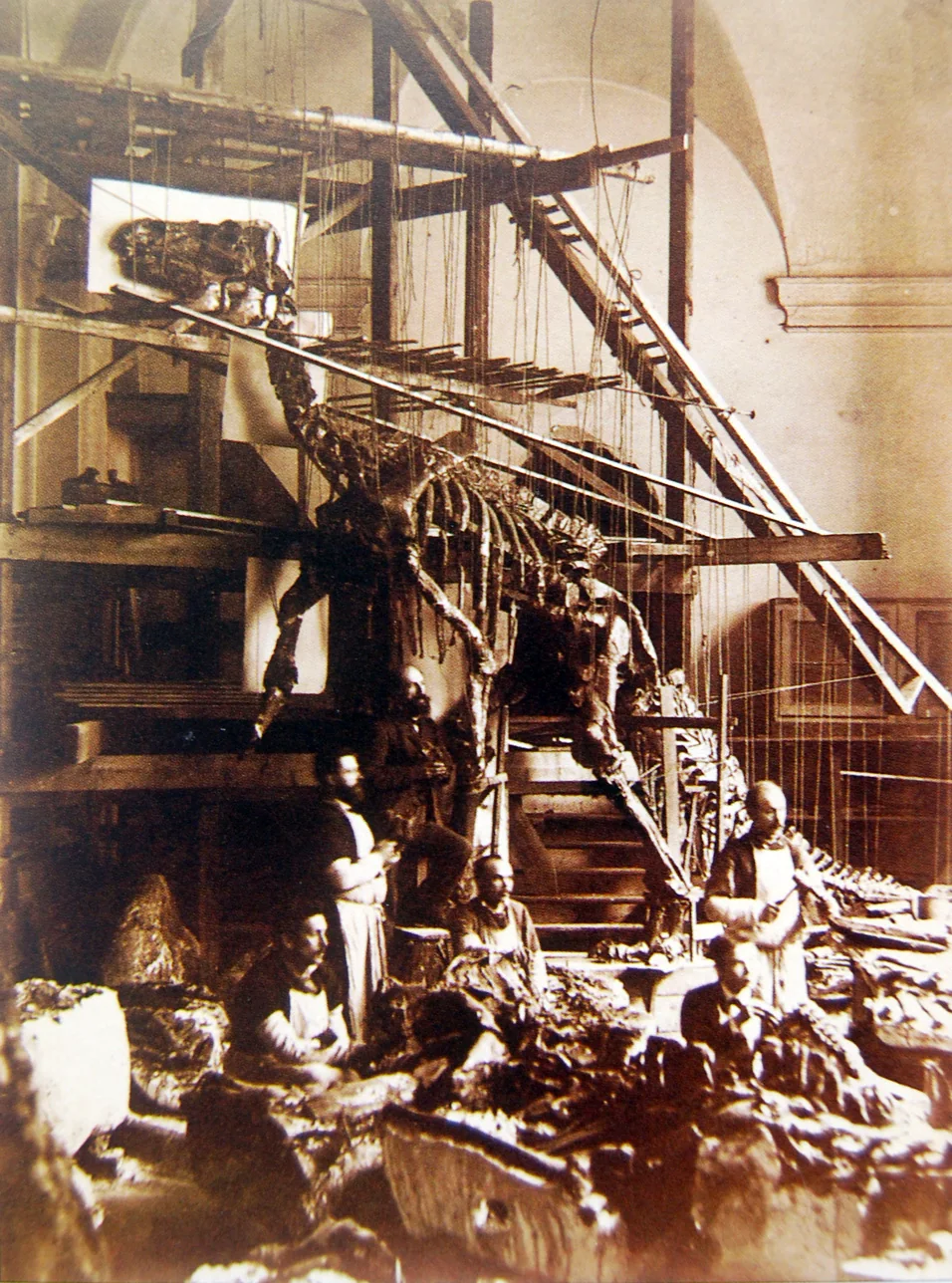
The Bernissart discovery began in 1878, in a mine more than 300 metres underground. The museum distinguishes the historical upright mounting from later research on a more horizontal posture.
Try this when you look
Compare fossil, support and reconstruction. Which parts are ancient material, which hold the skeleton up, and which express a scientific interpretation? Record one question you would ask a palaeontologist.
Before you visit
The image is a historical view, not a photograph of today’s gallery. A preserved mounting can document the history of science as well as the anatomy of an extinct animal.
- Material — Describe the actual specimen.
- Record — Find the collection or excavation record.
- Reconstruction — Separate original evidence from the display.
- Uncertainty — Keep an unanswered question visible.