
The maker and the support
Art et Marges identifies Juanma Gonzalez as a Spanish-born shoemaker, 1945–2007. Its teaching toolkit names leather, polish, gouache and inks, and describes pictures on clients’ soles. The museum explains that wear gradually erases these works. This is not the Stockholm-based artist of the same name.
What identifies the 2016 entry
The publisher’s contents place Painted Shoes at no.79, book page168. This identifies the campaign title and maker; it is not an inventory number. The museum’s toolkit and collection label explain his practice, but do not prove that every photographed pair is the exact pair used in the campaign. No object-specific dimensions or year of making are inferred.
Read one image in three passes
First identify the support: is the visible painted area a sole or an upper? Use the museum’s identified photograph, not an unrelated shoe image. Next list only what is visible: one colour boundary, one motif and one area where the surface interrupts the picture. Finally distinguish a visible abrasion from an assumed history of wear. If the image cannot resolve a mark, write unknown.
A complete observation record
Source: toolkit p.22. Recorded by the museum: paintings on soles; surfaces can wear away. Observation prompt: where does the painted field stop? Interpretation to test: the support changes how a landscape is read. Unresolved: date, dimensions, exact pair and whether the photographed work is currently displayed. The filled record deliberately contains a question, not an invented condition report.
Try a paper comparison
Use two equal paper rectangles as stand-ins for a support, not as replicas of the shoes. Draw the same short route across each. Cut a small window in a separate scrap and slide it over one drawing to conceal a section; leave the other visible. Compare what can still be followed. Record the difference between deliberate concealment in your model and actual material loss, which this activity does not reproduce. No historic object, shoe or painted surface needs to be altered.
Seeing and preserving are different questions
A photograph preserves one recorded appearance, not the material surface itself. Do not rub, repaint or test a museum object. Ask which part of a claim comes from the museum’s account, which from an image, and which remains an interpretation. For an in-person visit use the museum’s current programme; an older exhibition date does not promise display today.
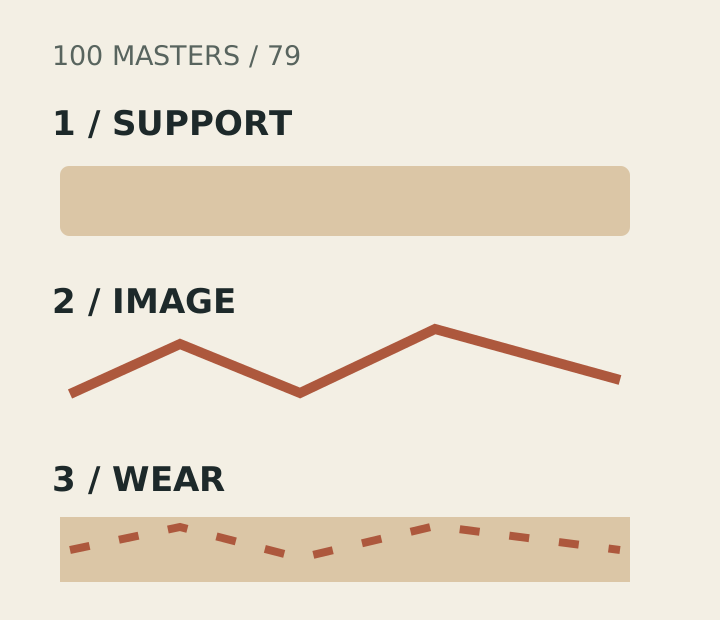
- SUPPORT
- IMAGE
- WEAR
Primary sources and scope
The exact campaign pair’s inventory, making date, dimensions and current display are not established by these sources.