
Start by classifying the object
The 2016 selection at the Institute of Natural Sciences comprises the Bernissart Iguanodons, Hainosaurus bernardi, a thylacine, the Apollo 17 moon sample and the Holzmaden sea lilies. These are not five examples of the same kind of thing. The thylacine is a preserved modern animal, the lunar object is a geological sample, and the sea lilies are fossil animals despite their botanical name. The comparison diagram below keeps these categories visible.
Separate specimen from presentation
A mount helps make a body intelligible, but its pose is not simply the position of an animal at death. A fossil slab preserves relationships between parts, yet preparation and cracks also affect what is visible. For each object, make three lines in a notebook: original material; arrangement or preparation; information supplied by a label. This prevents a photograph of an exhibition from becoming an unsupported claim about the animal’s behaviour.
Use provenance for the moon sample
A small basalt fragment cannot be authenticated as lunar just by looking at it. The museum’s dossier connects this specimen with Apollo 17 in 1972 and the Belgian transfer in 1973. Compare what you can observe with what the custody record explains. Keep it distinct from the separate Apollo 11 fragments described in the same dossier.
A manageable comparison visit
Choose two objects rather than trying to finish the whole museum. Try Iguanodon and Hainosaurus for classification, or thylacine and sea lilies for preservation. Save the pair, ask the museum about current display and write one comparison question. Our documentary source is a 2016 museum press dossier preserved in a Ghent translation study; it is not a live gallery plan.
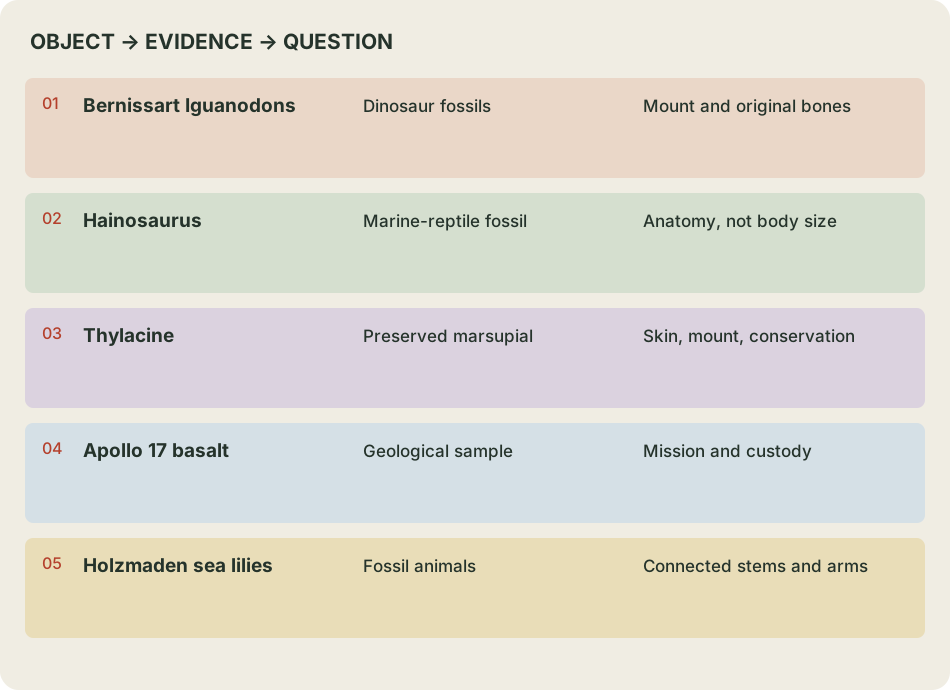
- Bernissart Iguanodons — Dinosaur fossils. Mount and original bones.
- Hainosaurus — Marine-reptile fossil. Anatomy, not body size.
- Thylacine — Preserved marsupial. Skin, mount, conservation.
- Apollo 17 basalt — Geological sample. Mission and custody.
- Holzmaden sea lilies — Fossil animals. Connected stems and arms.