
The campaign had a beginning and an end
The Brussels Museums Council and participating museums presented 100 objects from 41 museums during the campaign of 18 May–27 August 2016. The catalogue includes painting, houses, fossils, instruments and books, not just an art-historical ranking. Separate this shared campaign period from individual museums’ exhibitions, some of which followed different dates or continued later.
Discovery through a simple choice
Design agency Josworld’s project account describes a dating-style approach: people could react to objects and find a possible museum encounter. The agency reports campaign results and an award in its historical case study. Those are claims about that project, not visitor numbers or awards earned by this present website. The useful principle is to begin with curiosity rather than an obligation to see everything.
Make the choice more informative
Choose one object that immediately attracts you and another you would usually pass over. Read their notes and write why your first reaction differed. Look for a material, function or historical question they share. Saving a choice here is local to your browser: it does not reserve a museum ticket, confirm display or send your preference to a visitor-profile service.
Complete the encounter offline
Check access, choose a permitted viewing distance and give each object enough time for three observations. Read its label only after your first description, then revise the description where a source changes it. Return to your selection with one question, not a claim that the encounter is finished. The restored campaign history supports this method without pretending a 2016 promotion remains active.
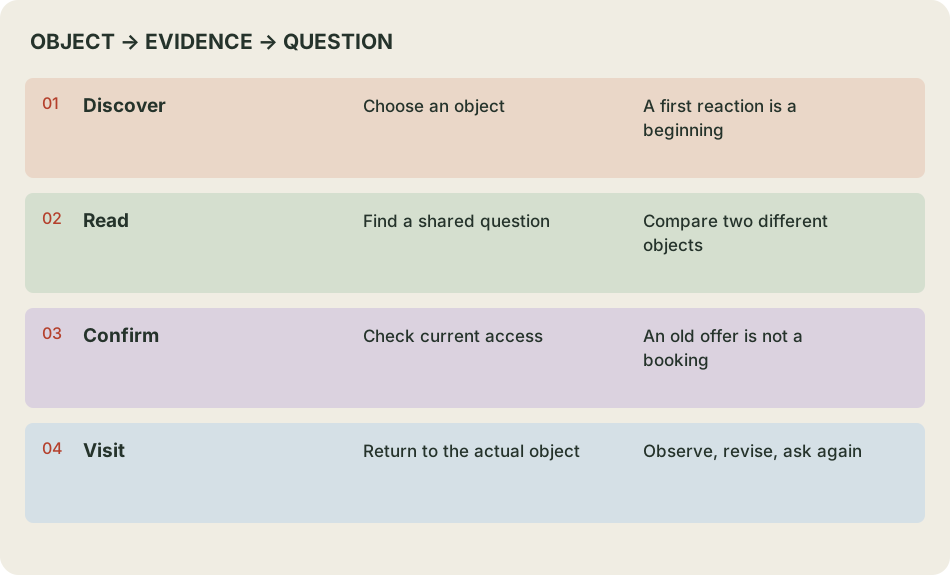
- Discover — Choose an object. A first reaction is a beginning.
- Read — Find a shared question. Compare two different objects.
- Confirm — Check current access. An old offer is not a booking.
- Visit — Return to the actual object. Observe, revise, ask again.
Keep exploring
- Fall Of The Rebel Angels
- Six-Independent-Piston-Valved And Seven-Belled Trombone
- Moon Rock
- Cruydt-Boeck, Western And Central Europe Plant Herbal